A vet handheld monitor is a portable, battery‑powered device designed to measure and display essential physiological parameters in animals during veterinary care. Unlike bulky stationary monitors, this compact instrument allows clinicians to obtain real‑time readings of oxygen saturation (SpO₂), non‑invasive blood pressure (NIBP), and body temperature (TEMP) directly at the point of examination. The primary purpose of a vet handheld monitor is to enable rapid triage and continuous observation without moving the patient to a dedicated monitoring station. Whether used for a routine wellness check, preoperative assessment, or emergency resuscitation, the vet handheld monitor provides objective data that guides clinical decision‑making. For species ranging from exotic birds to large dogs, this device eliminates guesswork by delivering numeric values and waveforms that reflect cardiovascular and respiratory status. In practices where every second counts, a reliable vet handheld monitor transforms subjective patient evaluation into quantifiable, actionable information.
The underlying technology of a vet handheld monitor relies on photoplethysmography for SpO₂ measurement and oscillometry for NIBP determination. A typical vet handheld monitor uses a reusable or disposable sensor placed on poorly pigmented, hairless areas such as the tongue, ear, or paw pad to detect pulsatile blood flow. Temperature measurement is usually achieved via a fast‑response thermistor probe inserted rectally or placed in the esophagus. One important nuance is that a vet handheld monitor designed for small animals may have different sensor sensitivity and inflation algorithms compared to units intended for horses or cattle. Most modern vet handheld monitors incorporate motion‑artifact rejection algorithms to minimize false readings caused by patient movement or shivering. The device’s memory capacity allows storage of multiple patient records, which is particularly useful for serial measurements during hospitalization. Additionally, a quality vet handheld monitor should display SpO₂ waveforms (plethysmograph) to help the user verify signal quality before accepting a reading. Understanding the limitations of each parameter—for example, poor peripheral perfusion can render SpO₂ unreliable—is essential for proper interpretation. Regular calibration verification and battery maintenance ensure that the vet handheld monitor remains accurate across thousands of clinical encounters.
The versatility of a vet handheld monitor makes it valuable across virtually every veterinary setting. In emergency and critical care, this device is the first tool reached for when a dyspneic or collapsed animal arrives. A rapid SpO₂ reading from the vet handheld monitor confirms hypoxemia, while NIBP reveals hypotension, guiding immediate oxygen therapy and fluid resuscitation. During anesthesia induction and recovery, a vet handheld monitor serves as a backup or primary monitor for patients undergoing short procedures where a full anesthesia workstation is unavailable—such as field castrations or dental cleanings. For outpatient consultations, a vet handheld monitor allows the practitioner to quickly screen for occult heart disease or respiratory compromise without subjecting the patient to multiple handling steps. In large animal practice, a ruggedized vet handheld monitor can be used in barns, stables, or pastures to evaluate a colicky horse or a febrile calf without transporting the animal to a clinic. Wildlife rehabilitation centers benefit enormously from a portable vet handheld monitor because stressed wild animals cannot be easily moved to fixed equipment. Even in postoperative recovery wards, a vet handheld monitor enables intermittent spot checks without disturbing the patient’s cage rest. For multi‑patient scenarios such as breeding farms or kennels, a single vet handheld monitor can be rotated through dozens of animals, providing objective data for health certification. Another growing application is telemedicine support: a technician can use a vet handheld monitor to capture vital signs remotely and transmit them to a consulting specialist. From routine wellness exams to advanced critical care, the vet handheld monitor reduces the gap between suspicion and confirmation.
Selecting a vet handheld monitor requires careful evaluation of several technical and operational parameters. Parameter accuracy is paramount: look for devices that have been validated against reference standards in veterinary patients, not merely human‑derived algorithms. The sensor compatibility matters enormously—a vet handheld monitor that only accepts human finger clips will perform poorly on a cat’s tail or a bird’s leg. Multiple probe options (wrap‑type, clip‑type, adhesive) increase clinical utility. Display readability in various lighting conditions is often overlooked; a vet handheld monitor with a high‑brightness, high‑resolution screen ensures visibility in direct sunlight or dim surgical suites. Battery life directly impacts fieldwork: a device that cannot last through a full day of ambulatory practice becomes a liability. Durability against drops, fluids, and dust is especially important for large animal or emergency use. The user interface should be intuitive, with clearly labeled buttons and minimal menu navigation—a vet handheld monitor that requires frequent reference to the manual will slow down workflow. Data export capabilities (USB, Bluetooth, or Wi‑Fi) facilitate electronic medical record integration, reducing transcription errors. Also consider the availability of replacement parts such as temperature probes, SpO₂ sensors, and NIBP cuffs in various sizes. Regulatory certifications (CE, FDA) provide assurance of manufacturing quality. Finally, evaluate the warranty and technical support offered by the supplier, as a vet handheld monitor is an investment that should serve the practice for years. Avoid no‑name devices with unverifiable accuracy claims; instead, prioritize proven veterinary‑specific designs.
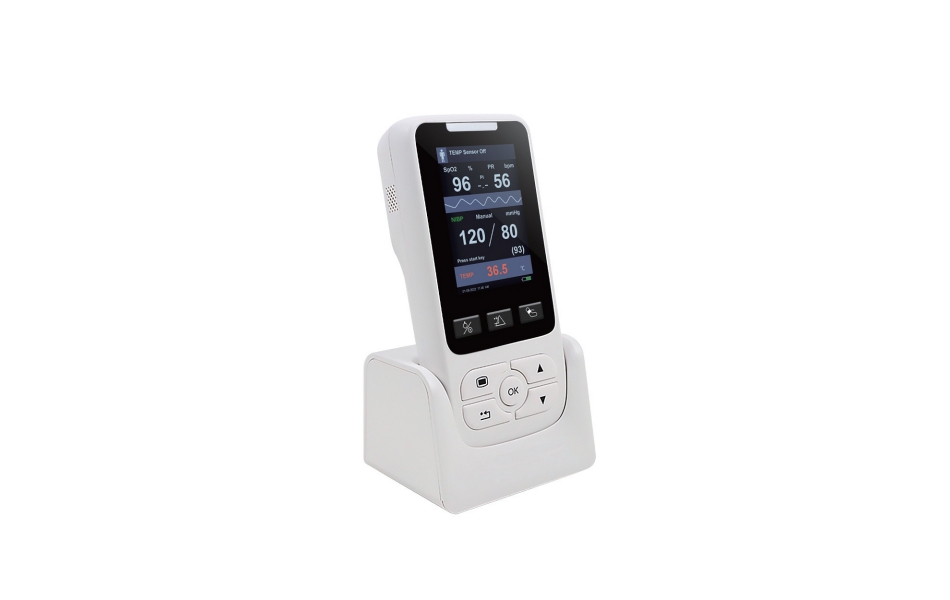
The OKCLEVER vet handheld monitor embodies the principles of ergonomic design specifically for point‑of‑care use. Its contoured body fits comfortably in one hand, allowing the clinician to hold the device while simultaneously restraining the patient or adjusting sensors. This vet handheld monitor is suitable for animals of all sizes, from a 2 kg feline to a 600 kg equine, thanks to a versatile cuff and probe portfolio. The high‑resolution 3.5‑inch color LCD display delivers sharp, easily readable numeric values and real‑time waveforms even under challenging lighting conditions. One of the standout features is the selectable working modes: spot check mode for rapid single measurements during physical exams, and continuous monitoring mode for tracking trends during anesthesia or recovery. In both modes, the OKCLEVER vet handheld monitor provides the classic vital sign measurements that clinicians rely on daily—SpO₂ (oxygen saturation), non‑invasive blood pressure (NIBP), and body temperature (TEMP). The device stores up to several hundred patient records, enabling longitudinal comparisons. Furthermore, the alarm system for out‑of‑range values can be customized per parameter, turning the vet handheld monitor into a proactive assistant rather than a passive display. Every component, from the optical sensor to the pressure transducer, has been selected for veterinary‑specific performance, minimizing motion artifacts and perfusion‑related errors. With the OKCLEVER vet handheld monitor, veterinary professionals gain a tool that is as reliable as it is portable.
Proper operation of a vet handheld monitor begins with patient preparation. For SpO₂ measurement, select a site with good perfusion, minimal hair, and flat surface—the tongue, lip fold, ear pinna, or tail base. Attach the appropriate sensor (clip, wrap, or adhesive) and connect it to the vet handheld monitor. Power on the device and select either spot check or continuous mode. For NIBP, choose a cuff whose width is approximately 40% of the limb circumference; place it at the same level as the heart. Wrap the cuff snugly but not tightly, then attach the hose to the vet handheld monitor. For temperature, lubricate a flexible rectal probe and insert it 2–4 cm depending on animal size. Once all sensors are connected, press the “Start” button on the vet handheld monitor. In spot check mode, the device will inflate the cuff, acquire SpO₂ and temperature, and display all three parameters within 30–45 seconds. In continuous mode, the vet handheld monitor will repeatedly measure NIBP at preset intervals (e.g., every 5, 10, or 15 minutes) while continuously displaying SpO₂ and temperature trends. Always observe the plethysmographic waveform on the vet handheld monitor’s screen; a regular, tall waveform indicates reliable SpO₂ reading, whereas a small or irregular waveform suggests poor signal. If the vet handheld monitor fails to obtain a reading, check sensor placement, increase perfusion by warming the site, or minimize patient movement. After completing measurements, clean the sensors and cuff according to the manufacturer’s instructions—mild soap and water for non‑electronic parts, alcohol wipes for the monitor body. Recharge the battery after each use so the vet handheld monitor is ready for the next patient. Regular monthly calibration checks using a known simulator will maintain accuracy over the device’s lifetime.
OKCLEVER is a professional veterinary medical device supplier whose founding team brings over thirty years of industry experience. We focus on delivering high‑quality equipment, components, and solutions covering diagnosis, surgery, and treatment for livestock enterprises, companion animal hospitals, and medical device distributors worldwide. Our products, including the OKCLEVER vet handheld monitor, meet or exceed international standards recognized in the European Union, the United States, and other regulated markets. We have successfully served numerous large‑scale agricultural groups, chain veterinary hospitals, and equipment distributors, earning their trust through uncompromising quality standards, operational flexibility, product safety, and responsive professional service. Every vet handheld monitor we manufacture undergoes rigorous testing to ensure accuracy and durability in real‑world clinical environments. When you choose an OKCLEVER vet handheld monitor, you are selecting a device backed by decades of veterinary engineering expertise and a commitment to supporting practitioners at every level.
Investing in a dedicated vet handheld monitor rather than repurposing human medical devices brings tangible benefits to patient safety and workflow efficiency. Human pulse oximeters often fail on furry, dark‑skinned, or poorly perfused animal tissues, leading to frustrating false alarms or no readings at all. By contrast, a veterinary‑specific vet handheld monitor uses algorithms and sensors tuned to animal physiology, delivering reliable data across species from parrots to ponies. The ability to switch between spot check and continuous modes means one vet handheld monitor can serve both the outpatient clinic and the surgical suite. Moreover, the portability encourages more frequent monitoring—staff are far more likely to check vitals when the vet handheld monitor is always within reach. This increased vigilance catches early signs of deterioration, such as dropping SpO₂ before cyanosis becomes visible, or trending hypotension before shock sets in. For practices looking to elevate their standard of care, the vet handheld monitor is a relatively low‑cost investment with high daily returns. From the first examination of a sick neonate to the final check on a recovering surgical patient, the vet handheld monitor provides objective, documentable evidence of physiological status. In an era where data‑driven medicine defines quality, no veterinary team should be without a reliable vet handheld monitor. Choose OKCLEVER for a device that combines veterinary heritage, modern engineering, and practical usability.

We provide high-quality medical devices and practical healthcare solutions for medical professionals, healthcare institutions, and research organizations worldwide.