A veterinary breathing bag is a core functional component of any inhalation anesthesia system used in animal medical procedures. The primary purpose of this breathing bag is to act as a compliant gas reservoir that stores oxygen and anesthetic agents during the interval between patient exhalation and the next inhalation. This reservoir function allows the anesthetist to observe real‑time respiratory patterns and, when needed, deliver intermittent positive pressure ventilation (IPPV) by manually compressing the breathing bag. In a typical circle rebreathing system, the breathing bag also enables the safe reuse of exhaled gases after carbon dioxide removal, significantly reducing fresh gas flow requirements and conserving expensive anesthetics. Without a properly functioning breathing bag, veterinary professionals cannot perform manual “bagging” during apneaor respiratory depression, nor can they reliably assess circuit integrity or patient effort. Whether used for routine spay/neuter surgeries or emergency resuscitations, the breathing bag is indispensable for maintaining controlled, safe ventilation across all companion and farm animal species.
Understanding the basic physics and sizing principles of a breathing bag is essential for safe veterinary anesthesia. The breathing bag’s volume capacity determines how much gas reserve is available during spontaneous breathing—veterinary textbooks generally recommend a breathing bag size approximately five times the patient’s expected tidal volume. For a 10 kg dog with a tidal volume around 150 mL, a 1 L breathing bag is adequate, whereas a 30 kg dog may require a 2–3 L breathing bag. The breathing bag must be constructed from elastic, non‑reactive materials such as high‑grade silicone or latex‑free compounds to allow smooth compression without excessive resistance. Another key attribute is the connector interface: nearly all modern veterinary anesthesia machines accept a 22 mm conical fitting (ISO 5356‑1 standard). A properly designed breathing bag should have minimal dead space, no internal pinholes or surface defects, and should not emit any pungent chemical odor that could irritate sensitive animal airways. Additionally, the breathing bag’s compliance—its ability to expand with low resistance—directly affects the work of breathing for small patients, making low‑resistance designs critical for cats and exotic pets. Regular inspection of the breathing bag for cracks, stickiness, or deformation is a basic patient safety measure that every veterinary team should incorporate into their pre‑anesthetic checklist.
The breathing bag is not merely a passive accessory; it becomes an active life‑support tool in numerous veterinary situations. First, during induction of general anesthesia, many animals experience a brief period of apnea following administration of intravenous agents such as propofol or alfaxalone. In these moments, immediate manual ventilation via the breathing bag is the standard of care to prevent hypoxemia. Second, for any surgical procedure that requires muscle relaxation—such as orthopedic fracture repair, abdominal exploration, or thoracic surgery—controlled mechanical or manual ventilation becomes mandatory, and the breathing bag provides the interface for delivering those positive‑pressure breaths. Third, in patients with compromised respiratory mechanics, including diaphragmatic hernia, pleural effusion, or severe pneumonia, the breathing bag allows the anesthetist to augment ventilation and maintain normocapnia. Fourth, during open‑chest procedures (thoracotomy), the breathing bag is the only means to inflate the lungs while the thoracic cavity is open to atmospheric pressure. Fifth, diagnostic imaging procedures such as high‑resolution chest CT or inflated thoracic radiographs depend on controlled breath‑holds using the breathing bag. Sixth, emergency scenarios like cardiopulmonary resuscitation (CPR) require the breathing bag to deliver rescue breaths between chest compressions. Even during routine maintenance, the breathing bag serves as a visual indicator of circuit leaks or valve malfunction—an unexpected deflation pattern immediately alerts the team to check the system. From equine colic surgeries to feline dental cleanings, the breathing bag is called upon daily in every veterinary hospital that performs inhalation anesthesia.
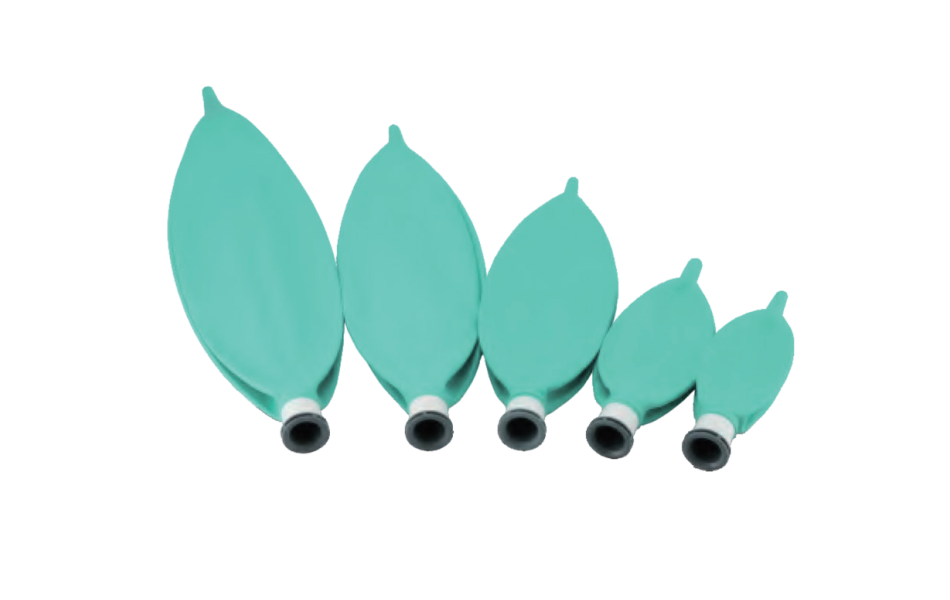
Selecting the right breathing bag demands attention to several technical and safety parameters that directly impact patient outcomes. Capacity is the first decision point: a breathing bag that is too small will not provide sufficient gas reserve, forcing the anesthetist to constantly refill the circuit, while an oversized breathing bag may create excessive compliance and reduce the sensitivity of manual ventilation. For most small animal practices, a set of three breathing bag sizes (1L, 2L, 3L) covers the majority of patients, but large animal facilities will require much larger breathing bags—up to 10–30 liters for horses. Material quality is equally critical. Latex breathing bags are increasingly discouraged due to risk of allergic reactions and rapid degradation; medical‑grade silicone or thermoplastic elastomers are preferred for their durability, autoclavability, and complete absence of irritating odors. The breathing bag must also have a standardized connector—the 22 mm female fitting is universal, but some low‑quality products use non‑conforming sizes that leak or fail to seal. Surface integrity cannot be overlooked: a breathing bag with pinholes, rough spots, or embedded dirt will lose gas and compromise anesthetic delivery. Regulatory compliance matters for legal purchase in regulated markets: look for breathing bags that meet ISO 5362:2024 (Anesthetic reservoir bags) and carry CE marking or FDA recognition. Finally, consider the breathing bag’s tactile properties: a soft, non‑slip handle surface improves grip during prolonged manual ventilation, reducing hand fatigue. Always request product specifications and, if possible, test a sample breathing bag for odor, flexibility, and airtight seal before bulk procurement.
The OKCLEVER breathing bag is manufactured to exceed the demands of modern veterinary anesthesia. Our range includes four precisely calibrated capacities to match patients from small cats to large dogs: 23L, 18L, 16L, and 12L. Each breathing bag features carefully dimensioned chambers—the 23L model measures 245×150 mm, while the 18L breathing bag measures 245×350 mm, ensuring consistent expansion characteristics across the series. Every OKCLEVER breathing bag is produced without any pungent smell, eliminating the chemical off‑gassing that can cause airway irritation or nausea among staff. The soft handle design provides a secure, comfortable grip even during extended manual bagging procedures, while the smooth surface texture prevents abrasive contact with adjacent circuit components. All models incorporate a 22 mm standard connector that seamlessly interfaces with every major veterinary anesthesia machine on the market, from small portable units to large‑animal workstations. Additionally, each breathing bag is supplied with a protective net that extends service life by reducing wear during handling and storage. The internal and external surfaces are guaranteed smooth, free from pinholes, and devoid of any dirt or manufacturing debris. This rigorous quality control ensures that every OKCLEVER breathing bag delivers reliable, leak‑free performance throughout countless anesthetic events.
Correct operation of the breathing bag begins with a mandatory pre‑anesthesia system check. Attach the breathing bag to the rebreathing circuit’s reservoir port, close the adjustable pressure limiting (APL) valve completely, and occlude the patient end of the circuit. Turn on the oxygen flowmeter to approximately 1–2 L/min and observe the breathing bag. It should inflate steadily and maintain its volume when the oxygen flow is stopped. If the breathing bag deflates within a few seconds despite a closed APL valve, systematically inspect all connections, the endotracheal tube cuff, and the breathing bag itself for leaks. For spontaneous breathing patients, select a breathing bag sized approximately five times the expected tidal volume, keep the APL valve partially open (typically 1–2 cm H₂O), and allow the patient’s own respiratory effort to move the breathing bag. When manual ventilation is indicated—such as during apnea or controlled ventilation—close the APL valve fully, observe the patient’s chest excursion (not the breathing bag alone), and gently squeeze the breathing bag to achieve visible but moderate chest rise. Inspiration should be delivered over 1–1.5 seconds, followed by complete opening of the APL valve to allow passive exhalation. Maintain an inspiratory‑to‑expiratory ratio of 1:3 to 1:4, and limit peak airway pressure to 15–20 cm H₂O for most dogs and cats. After each use, clean reusable breathing bags with a mild enzymatic detergent or dilute chlorhexidine solution, rinse thoroughly with distilled water, and allow to air‑dry completely before storage. Never expose silicone breathing bags to high‑temperature autoclaving unless explicitly rated for such sterilization.
OKCLEVER is a dedicated veterinary medical device supplier whose core team brings over thirty years of hands‑on industry experience. We focus on providing high‑quality equipment, components, and integrated solutions covering diagnosis, surgery, and treatment for livestock enterprises, companion animal hospitals, and medical device distributors across global markets. Our entire product range, including the OKCLEVER breathing bag, meets or exceeds international standards recognized in the European Union, the United States, and other regulated regions. We have successfully served numerous large‑scale agricultural groups, chain veterinary hospitals, and equipment distributors, earning their trust through uncompromising quality standards, operational flexibility, product safety, and responsive professional service. When you choose an OKCLEVER breathing bag, you select a device backed by decades of manufacturing expertise, rigorous quality assurance protocols, and a deep understanding of real‑world veterinary anesthesia demands.
The breathing bag is handled more frequently than almost any other anesthesia component, yet its importance is often underestimated until a failure occurs. A degraded or poorly manufactured breathing bag can cause undetected gas leaks, leading to waste of expensive anesthetics, operating room pollution, and—most critically—inadequate oxygen delivery to the patient. Conversely, a premium breathing bag provides predictable compliance, effortless cleaning, and years of reliable service. By investing in a breathing bag from a proven supplier like OKCLEVER, veterinary practices protect both patient safety and operational efficiency. Every member of the anesthesia team should understand how to inspect, size, and operate the breathing bag correctly. When the next emergency arises—whether a diaphragmatic hernia repair or a cardiac arrest—the breathing bag will be the tool you reach for to deliver those first life‑saving breaths. Choose wisely, inspect regularly, and never compromise on the breathing bag that stands between your patient and adequate ventilation.

We provide high-quality medical devices and practical healthcare solutions for medical professionals, healthcare institutions, and research organizations worldwide.